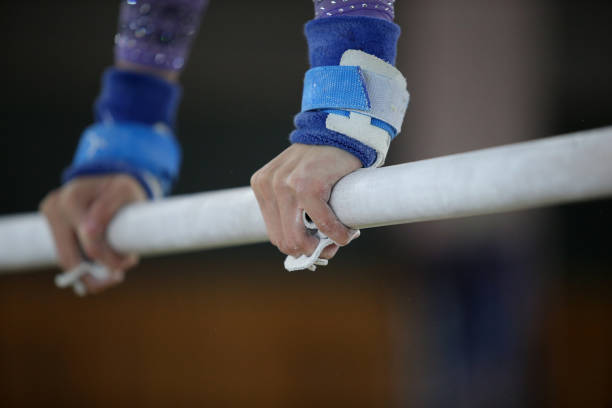
In sports like gymnastics, martial arts, and high-jumping, athletes often seem to defy gravity. But what goes up must come down, and the moment of landing is one of the most dangerous points in any high-impact activity. A poorly managed landing can lead to serious injuries, from sprains and fractures to severe spinal trauma. Preventing these injuries is not just about an athlete’s technique; it is a matter of applied science. The key lies in understanding how to absorb and reduce the powerful forces generated during impact.
The physics is surprisingly simple. When an athlete falls, their body builds up kinetic energy. Upon landing, all that energy must be transferred and dissipated. If they land on a hard, unforgiving surface like a wooden floor or concrete, the impact time is incredibly short just a fraction of a second. This forces the body to absorb a huge amount of force all at once, which can easily overwhelm bones, joints, and ligaments. Think of it like this: the shorter the stop, the sharper the shock.
This is where specialised safety equipment comes in. The best way to prevent injury is to increase the time it takes for the body to come to a complete stop. By extending the duration of the impact, you effectively reduce the peak force felt by the athlete. Purpose-designed crash mats are engineered to do exactly this. They are made from thick, multi-layered foam that compresses upon impact, acting like a giant brake. As the foam squashes down, it slows the athlete’s descent over a longer period, dissipating the dangerous forces and turning a potentially harmful landing into a safe and controlled one.
The construction of these mats is highly specialised, and not all are created equal. The type of foam, its density, and its thickness are all carefully chosen based on the intended use. For example, a mat used for advanced gymnastics training must absorb impact from a much greater height than one used in a primary school PE lesson. That is why high-quality crash mats often use a combination of foams. A softer, open-cell foam layer on top provides initial cushioning, while a denser, closed-cell foam layer underneath offers greater resistance to prevent the athlete from “bottoming out” and hitting the hard floor below. The outer cover is also a critical component; it is usually made from heavy-duty, flame-retardant PVC vinyl that is both durable and easy to clean.
To ensure safety and performance, equipment must meet certain standards. In the UK and Europe, reputable crash mats are certified to specific standards, such as those set by the British Standards Institution (BSI). This certification guarantees that the mat has been tested to perform reliably under specific impact conditions, giving coaches and athletes peace of mind.
While commonly seen in gymnastics clubs, the application for this protective technology is incredibly broad. Stunt performers in the film industry rely on huge arrays of custom crash mats to perform high falls safely. Indoor climbing and bouldering centres place thick, seamless matting systems underneath walls to protect climbers from inevitable falls. They are also used in therapeutic settings for children with sensory or physical challenges, providing a safe environment for play and developing motor skills.
Proper maintenance is also essential to ensure longevity and safety. Mats should be cleaned regularly and inspected for any tears in the cover or signs of foam degradation. When a mat starts to feel soft or no longer offers the same level of resistance, it is a sign that the foam has lost its integrity and it is time for a replacement. Storing them flat helps maintain their shape and effectiveness. Ultimately, creating a safe space for high-impact activities depends on a scientific approach to managing energy. By using professionally made and certified crash mats, facility managers can be confident that they are providing the best possible protection, allowing athletes to push their boundaries and achieve new heights safely.