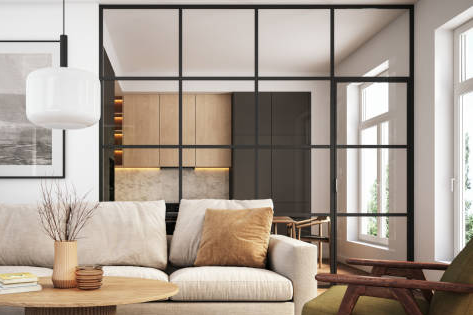
In many Irish homes, the most successful room is not always the one that asks for the eye first. It may be the room that steps back. It works, serves, clears space, and lets the rest of the home breathe.
This can sound odd because luxury is often shown through bold finishes, large islands, and dramatic details. Yet many homeowners in Dublin, Cork, Galway, and smaller towns may want something calmer. They want a cooking space that supports the house without turning every visit into a tour.
Luxury kitchens can do this when they understand restraint. They do not need to prove their cost in every handle, tap, or panel. Instead, they may hide the hardest-working parts behind a clear line. The fridge does not shout. The bin does not interrupt the room. The extractor does its job without becoming the centre of the ceiling.
A room that disappears still needs craft. Doors must meet cleanly. Materials must sit well beside timber floors, stone walls, painted joinery, or the soft light common in many Irish homes. If the room opens into a living area, the view matters even more. No one wants to relax in the evening while staring at visual noise from the day.
This is where design becomes more careful than showy. A tall wall of units can look heavy if it has no rhythm. An island can block a room if it feels like furniture placed for a photograph. A row of open shelves can look charming at first, then become a display of jobs not yet done. The designer has to know what to remove, not only what to add.
Can luxury kitchens feel generous without taking over the home? They probably can, if the plan starts with what the room should release. It should release counter space after breakfast. It should release the sitting area from mess. It should release the homeowner from explaining where everything is kept. These small freedoms may matter more than a feature that looks impressive once.
In Ireland, where many homes carry mixed histories, this matters. A new room may sit inside a period house, a modern extension, a rural build, or a renovated terrace. It has to respect what is already there. If the design pushes too hard, it can feel imported rather than belonging.
The decision can also protect the rest of the house. In a narrow city home, a loud scheme may make nearby rooms feel smaller. In a country property, a hard modern statement may fight the older bones. A more measured design can join old and new without making either side feel false.
The kitchen that knows when to disappear has a quiet kind of confidence. It may use fine stone, warm metal, soft colour, or handmade detail, but it does not crowd the senses. It gives the morning a clean start and the evening a softer landing. It lets people notice the garden, the fireplace, the table, or the person speaking.
There is also a practical side. Fewer visible breaks can make cleaning feel less like a second shift. A simpler face can hide a well-planned interior. Neat lighting can guide the hand without turning the ceiling into a grid. None of this needs to feel severe.
The mistake is to think that a discreet room lacks personality. Personality can live in proportion, touch, and ease. It can appear in the way a door closes, the way light falls across a surface, or the way the room looks settled even after a full day.
For Irish homeowners, luxury kitchens may be at their best when they are noticed less often but appreciated more deeply. The room does not vanish because it is dull. It vanishes because it has done the work of making home feel composed.