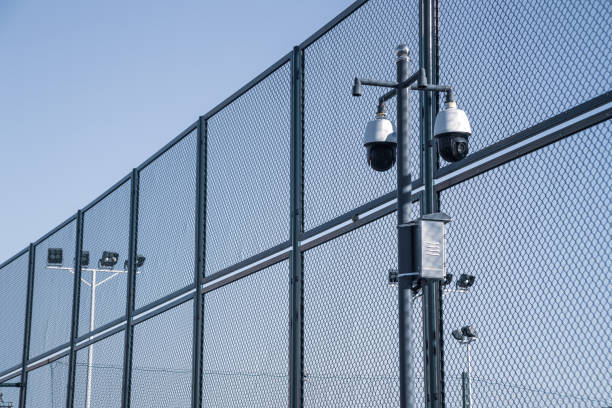
A secure site does not begin at the front door. The perimeter is the first place where a property can discourage casual intrusion, slow deliberate entry and give staff more time to notice unusual activity. That makes the outer boundary part of a wider protection plan rather than a decorative edge. When the line around a site is weak, poorly placed or easy to bypass, stronger measures closer to the building may be forced to do more work than intended.
The barrier should match the level of exposure the site faces. A warehouse beside a public footpath, an industrial yard storing valuable equipment and a low-risk office complex do not present the same problems. Height, construction, visibility and the way the barrier meets the ground can all affect how difficult it is to climb, cut, lift or pass through. The right response starts with the site, not with a generic specification.
Visibility changes behaviour
A perimeter can discourage unwanted entry simply by making boundaries clear and removing easy opportunities. Long hidden sections, overgrown vegetation and blind corners can reduce that effect because people may feel less observed. Open designs can improve sightlines where privacy is not essential, allowing staff, cameras or passing patrols to see activity near the boundary.
Lighting and landscaping also influence the result. Their relationship matters because darkness, planting or nearby objects can create an easy, concealed approach. Dense planting directly beside a fence may create concealment or give a climber something to stand on. Poorly positioned lighting can leave bright areas beside deep shadow. A coordinated design considers these conditions together so the perimeter remains readable during both daylight and after-hours operation.
Access points deserve special attention
Most sites cannot function as a continuous sealed barrier. Vehicles, staff, visitors and deliveries need controlled ways in and out. Gates therefore deserve the same attention as the fence line itself. A strong boundary can be undermined by a gate with weak hardware, excessive ground clearance or an operating routine that leaves it open longer than necessary.
Pedestrian access should also be easy to understand. Visitors who cannot identify the correct entrance may walk along the boundary looking for another route. Clear signs, defined pathways and appropriate access control help direct legitimate users without creating confusion. Where security fencing meets a gate, the transition should avoid gaps or changes in height that create an easier point of entry.
Design for the site that actually operates
A perimeter has to work with daily activity. Trucks may need wide turning space, emergency routes must stay usable and maintenance crews may require access to equipment near the boundary. If the design ignores these needs, gates can be propped open, temporary openings can appear or sections may be altered later in ways that weaken protection.
It also helps to consider what sits immediately inside the fence. Pallets, bins, parked vehicles and stored materials can become climbing aids when placed too close. Keeping a clear zone where practical makes the barrier harder to defeat and easier to inspect. The same space may improve camera views and simplify vegetation control.
Maintenance keeps the barrier credible
A routine inspection of security fencing should look beyond obvious breaks and include fasteners, gate alignment, ground clearances and nearby objects that may have changed since installation.
Even a well-designed perimeter loses value if damage remains visible. Loose fixings, corrosion, bent sections, broken locks and soil erosion beneath the fence can create weaknesses that grow over time. Regular checks are especially useful after storms, vehicle impacts, construction work or changes to neighbouring land.
In practice, security fencing works best as one layer in a broader system that can include lighting, surveillance, access control and site procedures. Its role is to define, deter and delay, not to make a property impossible to enter. When the perimeter matches real risks, supports legitimate movement and receives routine attention, it creates a stronger first line of defence before an intruder reaches the building itself.