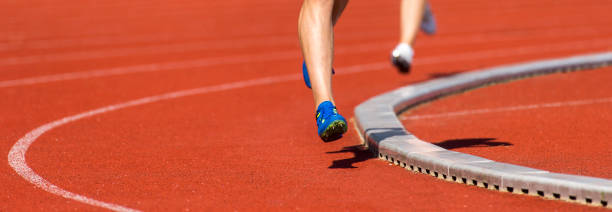
Running tracks have come a long way from the cinder and grass ovals of the past. Today, a modern high-performance track is a sophisticated engineering project designed to maximise athlete speed, minimise injury risk, and withstand the rigours of all-weather training. For stadium owners, universities, and elite training centres, upgrading a track is a significant investment. To get it right, one must focus on the technological advancements in surface materials and the integration of smart athletics equipment into the infrastructure itself.
The most critical upgrade for any track is the surface. Modern synthetic tracks are typically made from polyurethane and rubber granules. The “sandwich system” is a popular choice for high-performance venues. It consists of a paved-in-place base layer of rubber and binder for shock absorption, topped with a flood coat of polyurethane and coloured rubber granules. This combination provides the perfect balance of energy return (stiffness) for sprinters and cushioning (compliance) for distance runners. Upgrading to a World Athletics certified surface ensures the track is fast, safe, and eligible to host record-breaking performances.
However, the surface is just the beginning. A truly modern facility integrates technology directly into the track. Smart tracks now feature built-in timing sensors and force plates located at start lines and jump take-off boards. These sensors provide real-time data on an athlete’s reaction time, stride length, and ground contact force. This transforms the track from a passive surface into an active coaching tool. Coupled with high-speed camera systems mounted on the perimeter, coaches can analyse biomechanics instantly without needing to set up temporary tripods and wires.
Another essential upgrade area is the fixed athletics equipment installed around the arena. The cage for hammer and discus throws has seen significant safety improvements. Modern concentric circle cages with movable panels allow the “danger zone” to be drastically reduced, keeping track runners and spectators safe even during throwing competitions. Upgrading to an aluminium cage structure reduces maintenance as it does not rust, and newer netting materials are stronger yet more transparent, improving visibility for spectators.
Sand pits for long and triple jumps also benefit from modernisation. Upgrading to pre-fabricated concrete pit forms with integrated sand traps and soft-edge borders improves safety and reduces the mess of sand spilling onto the runway. The runways themselves can be upgraded with contrasting coloured inserts for take-off boards, making fouls easier to judge electronically. Improved drainage systems beneath the pits help maintain consistent sand quality and reduce downtime after wet weather. In addition, using calibrated, competition-grade sand ensures better athlete performance while extending the lifespan of the facility.
Steeplechase water jumps and pole vault boxes are other infrastructure elements that often need attention. Modern water jump pits offer adjustable hurdle heights to accommodate men’s, women’s, and junior specifications easily. Upgrading the pole vault box to a stainless steel model ensures longevity and precise dimensions, preventing the pole from sticking or sliding dangerously during the plant phase.
Finally, lighting is a key performance upgrade. Replacing old halogen floodlights with modern LED systems provides instant on/off capabilities, reduces energy costs significantly, and offers a brighter, more uniform light that is essential for photo-finish cameras and television broadcasts. Good lighting extends the training day in winter, making the facility more usable for the community.
Upgrading a facility involves more than just re-painting the lines. It requires a holistic approach that combines advanced surface technology with integrated, smart athletics equipment. These improvements not only attract elite events and athletes but also provide a safer, more durable, and higher-quality environment for everyone, from the local club runner to the future Olympic champion.